
Prompt 55: December 1, 2025
Trees are competitive; as all nature is. In this manner, we, like these trees, are inevitably left competing for the things we want most: resources, reputation, influence. Seemingly, our actions are not typically considered in moral terms when we are “just keeping up” with the competition. Who doesn’t want to keep up with the latest trends and technologies? Especially when there is real benefit to staying hip–or so I’m told. Perhaps a bit more dramatically, if another nation is developing an advanced weapon, is it so wrong that ours would follow suit to compete for that edge?
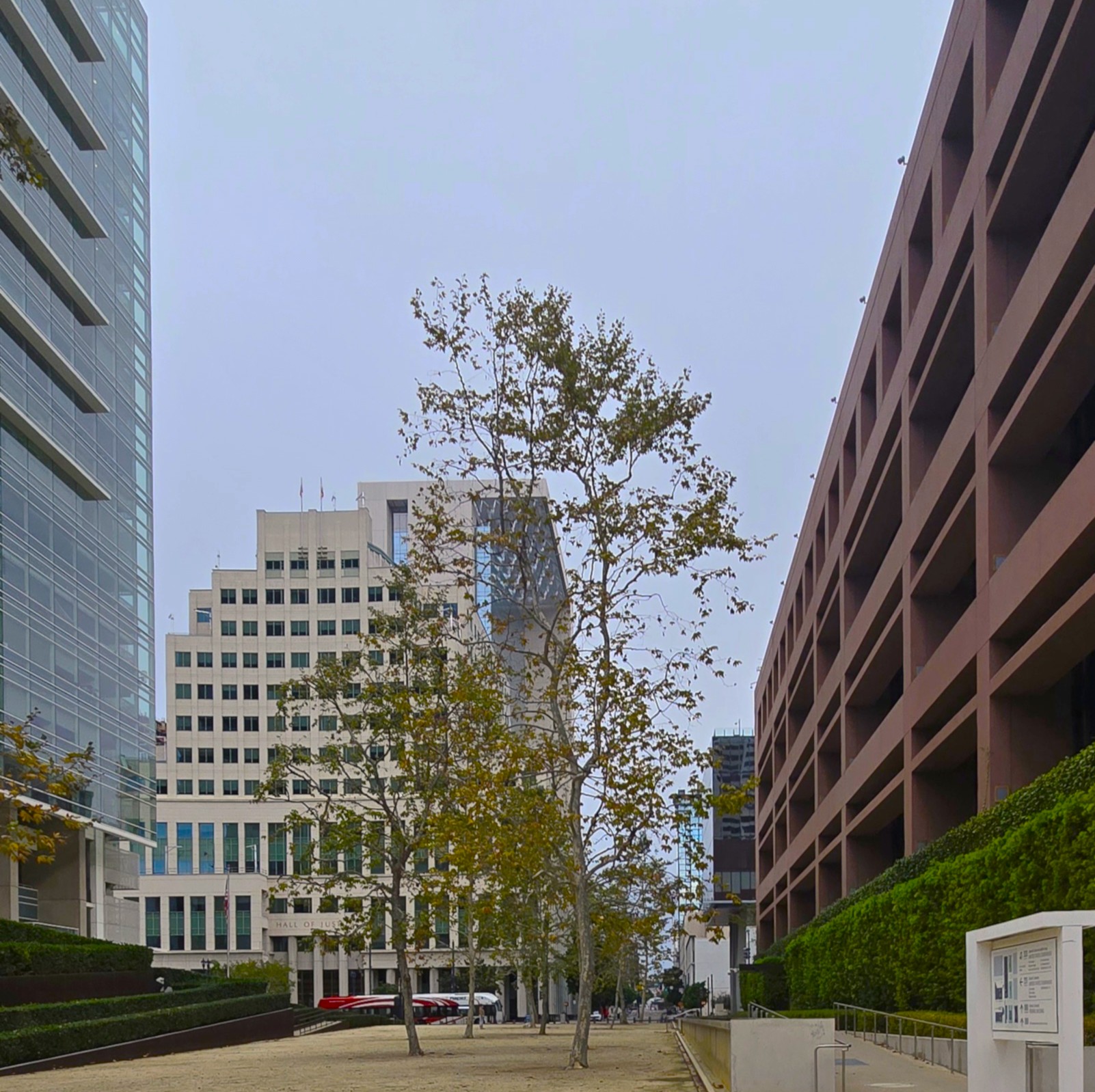
Every action we make participates in the underlying principles that are supported by that action – for better or worse. Another way to frame this thinking about principalities is through the cybernetic principle: the purpose of a system is what it does. The sycamore trees in this picture are the straightest I’ve ever seen, and may some day be the tallest. In this small space between San Diego real estate, these sycamores are competing for light against the several-storied skyscrapers on both sides. The underlying principle has formed these creatures to compete for light as they have done in their natural habitat. In a forest, trees of the same species will typically grow taller and straighter than if they are grown in a field without anything to block the sunlight. Whether the architects knew it or not, this addition of foliage in the urban block is a living microcosm of the same principles governing urban development.
The architecture of a city tells the story of a place, its economy, its people, and, most importantly, the values of those people. As the sycamores compete for light and water, the architecture competes for attention, talent, and capital. Trees grow taller in a forest, architecture grows starker in The Jungle. The architects know this, so they have personal incentive to participate.
This revelation came as I walked through the downtown skyscrapers on a recent work trip. I was able to recognize the tasteful aesthetic of each building on its own; however, the scene was so forgettable. Why wasn’t it beautiful? Though every building, in its own right, stood with proud design characteristics, they had no regard for the buildings surrounding them. The entire urban center was incoherent and each block I walked deepened the looming sense of egoism.
Was that the intent? Who’s to blame: The owners? The architects? The city planners?
“By its fruit, you will know the tree.” – Jesus
Our country is rightly proud of its capitalist tradition, yet I do not share faith in its ability to solve all problems. Capitalism recognizes the competitive nature of living systems, and promises the best of everything will come from natural competition and its corrective abilities in the market. It’s a tragedy that some things can’t be corrected. We are often blind to our motivations, but they have real consequences for us and beyond.
The thread is open. Create boldly, and may the Spirit guide us all